
Most people spend a fair amount of energy picking out the right mattress or pillow, then completely overlook the temperature of the room they're sleeping in. Yet bedroom temperature is one of the few sleep factors you can control almost entirely, and it has a direct, measurable effect on how quickly you fall asleep and how well you stay asleep through the night. A thermostat set two or three degrees off from what your body needs can mean more tossing, more waking, and a groggier start to the next day.
This guide walks through why temperature matters so much for sleep, what range tends to work best, how to adjust as seasons change, and which bedding, clothing, and cooling tools actually make a difference. None of this replaces advice from a doctor or sleep specialist if you're dealing with ongoing restful sleep support or night sweats that seem unusual, but for the average person trying to sleep better tonight, temperature is a good place to start.
Why temperature affects sleep quality
Your body temperature isn't static overnight. It follows a daily rhythm, dropping by roughly 1 to 2 degrees Fahrenheit (about 0.5 to 1 degree Celsius) as part of the natural process that helps trigger sleepiness. This drop typically begins a couple of hours before your usual bedtime and continues into the early hours of sleep. A bedroom that's too warm can interfere with this drop, making it harder for your body to signal that it's time to rest.
This is tied to a process called thermoregulation, where blood vessels near the skin's surface widen (vasodilation) to release heat, particularly through the hands and feet. That's part of why your feet sometimes feel warm right before you fall asleep. If the room air is too hot for this heat release to happen efficiently, you may feel restless or find yourself kicking off blankets repeatedly.
On the flip side, a room that's too cold forces your body to work at generating and conserving heat, which can also disrupt the deeper stages of sleep. Research on sleep architecture has shown that both excessive heat and excessive cold reduce the amount of slow-wave sleep and REM sleep a person gets, even if they don't fully wake up and remember it in the morning.
The practical takeaway is that temperature isn't just a comfort preference, it's connected to the biological mechanics of falling and staying asleep. Getting it close to right removes one more obstacle between you and a full night's rest.
Ideal range for most bedrooms
Sleep researchers and organizations like the National Sleep Foundation commonly point to a range of 60 to 67 degrees Fahrenheit (about 15.5 to 19.5 degrees Celsius) as ideal for most adults. This isn't an arbitrary number, it reflects the temperature range where the body's natural overnight temperature drop can happen without extra effort from blankets, fans, or thermostats.
That said, "ideal" varies by individual. Someone who runs warm naturally, due to metabolism, body composition, or hormonal factors, might sleep better closer to 60 to 63 degrees. Someone who tends to feel cold, including many older adults whose circulation slows with age, might prefer the higher end, around 66 to 68 degrees.
| Group | Suggested range | Notes |
|---|---|---|
| General adults | 60-67°F (15.5-19.5°C) | Standard starting point for most bedrooms |
| Infants and toddlers | 68-72°F (20-22°C) | Babies can't regulate body heat as well; overheating is a specific concern |
| Older adults | 65-70°F (18-21°C) | Slower circulation often means feeling colder at lower settings |
| People with menopause-related night sweats | 60-65°F (15.5-18°C) | Cooler settings can help offset hot flashes; a doctor can advise on other options |
If you're not sure where to start, 65°F (18.3°C) is a reasonable middle ground for a couple sharing a bed with different preferences. From there, adjust in one or two degree increments over a few nights and pay attention to how quickly you fall asleep and how many times you wake up.
Adjusting for different seasons
Bedrooms rarely hold a perfectly steady temperature year-round unless you have a very reliable HVAC system, so seasonal adjustments matter. In summer, when outdoor heat and humidity climb, a bedroom can easily creep above 75°F (24°C) overnight without air conditioning, which is well outside the range most people sleep best in.
Practical summer steps include running the air conditioner on a timer so it cools the room an hour before bed rather than trying to catch up after you're already lying down, using blackout curtains to block daytime heat gain, and running a ceiling or box fan to keep air moving even if the room temperature itself is only slightly reduced. Moving air feels cooler on the skin than still air at the same temperature, which is a low-cost way to bridge the gap on nights when air conditioning alone isn't quite enough.
In winter, the opposite problem shows up: rooms can drop too low if heating is turned off overnight, or they can get overheated if a space heater or furnace runs all night without a thermostat cutoff. A programmable thermostat that dips the temperature slightly after you fall asleep, then brings it back up an hour before your alarm, tends to work better than keeping one static setting all night.
Humidity plays a role too. Winter heating systems often dry out indoor air, which can make a room feel colder than the thermostat reading suggests and can also dry out nasal passages, making sleep less comfortable. A basic humidifier set to maintain 30 to 50 percent relative humidity can make a 65°F room feel more comfortable without raising the actual temperature.
Bedding and clothing choices that help
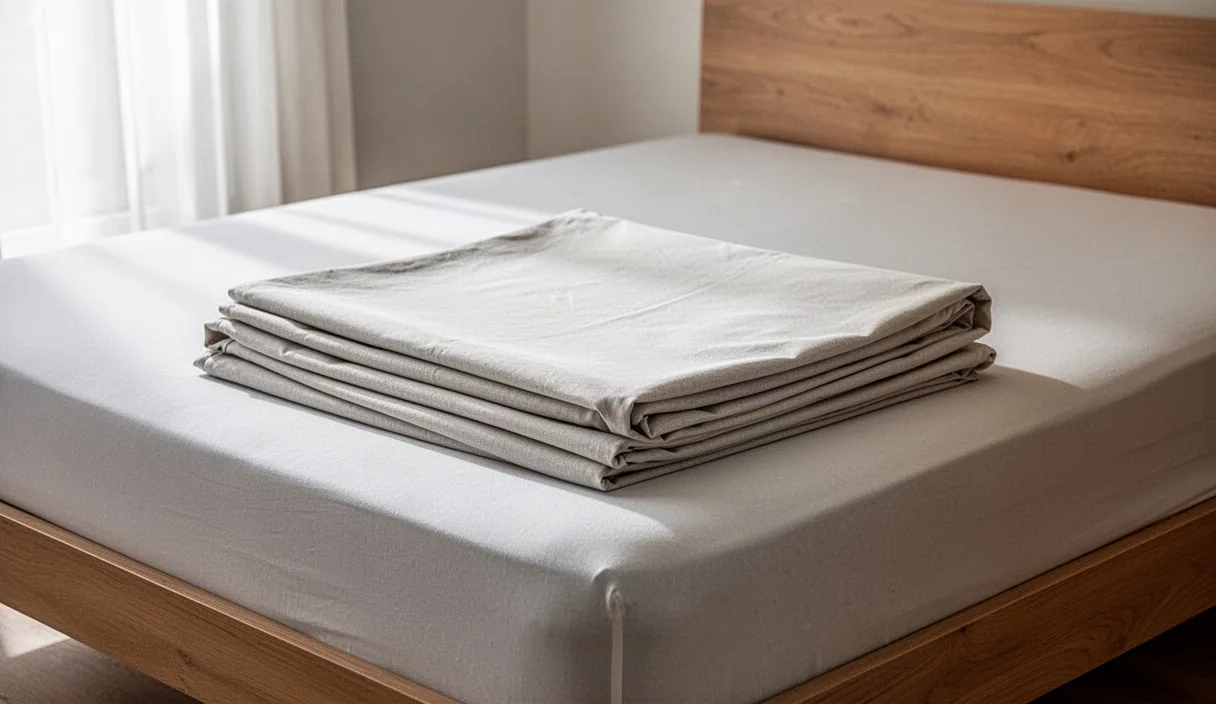
Even with a well-set thermostat, the wrong bedding or sleepwear can undo the effort. Material matters as much as thickness. Cotton, linen, and bamboo-derived fabrics breathe better than synthetic blends like polyester, which tend to trap heat and moisture against the skin.
For sheets, a lower thread count (around 200 to 400) in cotton percale actually tends to sleep cooler than very high thread count sateen sheets, because percale has a tighter, crisper weave that allows more airflow. Sateen feels silkier but traps more heat, which is worth knowing if you've been chasing thread count numbers assuming higher is always better.
Layering works better than a single heavy comforter. Two lighter blankets that can be added or removed partway through the night give you more control than one thick duvet, especially if your body temperature preference shifts between the first and second half of sleep, which is common as the night's deeper sleep stages pass.
- Sleepwear: loose-fitting cotton or moisture-wicking fabric works better than tight synthetic pajamas, which can trap heat against the skin.
- Mattress protectors: some are designed with cooling gel or breathable mesh layers that reduce heat buildup between you and the mattress.
- Pillow choice: memory foam retains more heat than shredded latex or buckwheat, so if you sleep hot, those alternatives are worth testing.
None of these swaps will fix a room that's fundamentally too warm, but combined with a reasonable thermostat setting, they close the remaining gap for people who run hot or cold relative to their partner.
Cooling tools worth considering
When a fan and thermostat aren't enough, a few specific tools address bedroom heat more directly. Cooling mattress pads that circulate water or use phase-change material can lower the surface temperature of the bed itself by several degrees, which matters because mattress surface heat, not just room air, is a major factor in how hot you feel overnight.
Dual-zone mattress pads let two people set different temperatures on each side of the bed, which solves a common problem in shared beds where one partner wants it cooler than the other. These systems typically range from a few hundred to over a thousand dollars depending on features, so they're a bigger investment than a fan or new sheets, but they're worth considering if temperature mismatch is a recurring issue.
Portable air conditioners and window units are a more direct fix for a room that simply runs too warm structurally, such as an upstairs bedroom with poor insulation or heavy afternoon sun exposure. A unit sized for the square footage of the room (most manufacturers list BTU recommendations by room size) will cool more efficiently than an oversized or undersized unit.
Simpler and cheaper options include cooling gel pillow inserts, moisture-wicking pillowcases, and even a frozen water bottle wrapped in a towel placed near your feet on an especially hot night. These aren't long-term solutions, but they're useful for occasional hot nights without buying new equipment.
Signs your room is too warm or too cold
It's not always obvious that temperature is the reason you're sleeping poorly, especially if you've gotten used to waking up a few times a night and assume that's normal. A few specific signs point toward temperature as the culprit.
If a room is too warm, you might notice waking up sweaty or with damp sheets, kicking off blankets repeatedly through the night, waking with a headache, or feeling unusually groggy despite going to bed at a reasonable hour. Frequent waking during the first half of the night, when deep sleep is more concentrated, is also a common pattern when the room runs hot.
If a room is too cold, common signs include waking up curled tightly under blankets, cold hands or feet that keep you awake, or difficulty falling asleep in the first place because your body is working to generate heat rather than winding down. Shivering that wakes you specifically is a clear signal to raise the temperature a few degrees.
Keeping a simple sleep log for a week, noting the thermostat setting and how many times you woke up, can help identify a pattern faster than guessing. If temperature adjustments don't resolve ongoing sleep disruption, especially recurring night sweats, it's worth mentioning to a doctor, since that can sometimes point to other underlying issues unrelated to room conditions.
Common mistakes
One frequent mistake is setting the thermostat once and never adjusting for the season, which leaves a bedroom too warm in summer or too cold in winter relative to the 60-67°F sweet spot. Another is over-relying on heavy bedding to compensate for a room that's genuinely too warm, which creates a cycle of overheating and blanket-kicking rather than addressing the actual cause.
People also sometimes chase thread count or luxury fabric labels without considering breathability, ending up with sheets that look nice but trap heat. And couples with mismatched temperature preferences often just argue over the single thermostat setting instead of trying dual-zone bedding or layered blankets that let each person adjust independently.
Next steps
Start by setting your bedroom thermostat to around 65°F (18.3°C) for a few nights and track how you sleep. If you consistently wake up sweaty, lower it by two degrees; if you wake up cold, raise it by two degrees, then reassess after another few nights. Swap out synthetic sheets for breathable cotton or linen if you haven't already, and consider layering blankets instead of using one heavy comforter.
If seasonal swings are the main issue, a programmable thermostat that adjusts automatically an hour before bed and an hour before waking removes the guesswork. And if you've tried the basics without improvement, particularly if night sweats or persistent waking continue regardless of room temperature, that's a reasonable point to bring the pattern up with a doctor rather than continuing to troubleshoot on your own.