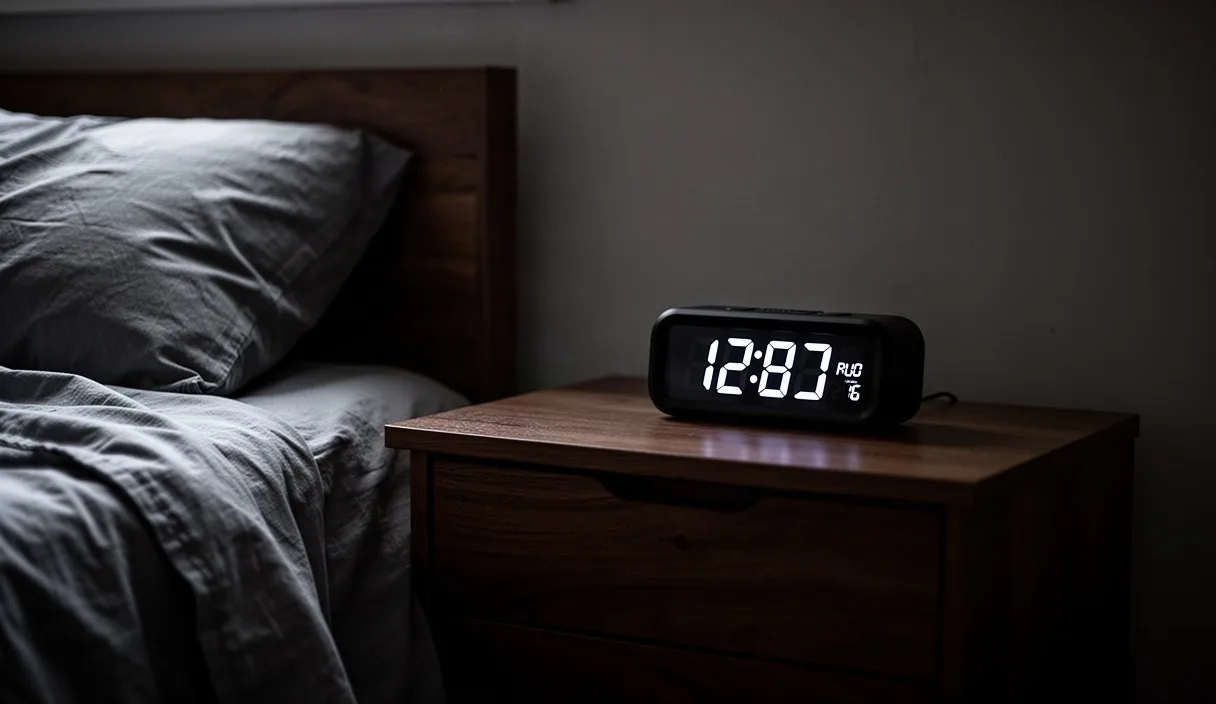
There is a particular kind of frustration that comes with opening your eyes, checking the clock, and seeing 3:04am staring back at you, again. Unlike trouble falling asleep at the start of the night, this pattern of waking in the deep middle of the night, often between 2am and 4am, tends to catch people off guard because they fell asleep just fine. The mystery of it, combined with the difficulty of falling back asleep once awake, is what makes this issue so exhausting over time.
The good news is that 3am waking is one of the more explainable sleep complaints once you look at what happens physiologically during that window. Body temperature, daily balance release, sleep cycle transitions, and even what you ate or drank hours earlier all converge around this time. This article walks through the most common causes, why they cluster around the early morning hours, and what practical adjustments tend to help before assuming something more serious is going on.
Common reasons for early middle-of-night waking
Sleep is not one continuous state. It moves through cycles of roughly 90 to 110 minutes each, alternating between lighter stages, deep slow-wave sleep, and REM. By the time you reach the third or fourth cycle, typically around 3 to 5 hours after falling asleep, you spend less time in deep sleep and more time in lighter stages and REM. Lighter sleep is inherently easier to wake from, which is why 3am often lines up with a natural transition point rather than a random glitch.
A full bladder is one of the most mundane but frequent culprits. As the night progresses, antidiuretic hormone production, which helps concentrate urine overnight, can decline with age or be affected by evening fluid intake, leading to a wake-up call around this time. This is common enough that sleep clinicians have a name for it: nocturia, and it becomes more frequent after age 50 for both men and women.
Blood sugar dips can also play a role. If dinner was light or eaten early, blood glucose may drop several hours later, prompting a stress hormone response that nudges you awake. This is more likely in people who skip dinner, drink alcohol without food, or have irregular eating patterns.
Other contributors include:
- Sleep apnea, where brief pauses in breathing cause repeated awakenings, often without the person remembering them clearly
- Restless legs or periodic limb movements that disrupt lighter sleep stages
- Environmental disturbances such as a partner moving, a pet, or outside noise that happens to occur during a lighter sleep phase
- Certain medications, including some blood pressure drugs and diuretics, that alter sleep architecture or increase nighttime urination
Role of stress and daily balance timing
daily balance, often labeled the stress hormone, follows a daily rhythm that is lowest around midnight and begins rising in the second half of the night, peaking shortly after waking in the morning. This is a normal part of the body's preparation to wake up, sometimes called the daily balance awakening response. In people under chronic stress, this rise can start earlier and spike more sharply, which may explain why anxious individuals often wake specifically between 2am and 4am rather than at other random times.
When daily balance rises too early or too abruptly, it can trigger a mini fight-or-flight response, a racing mind, or a sense of dread that makes falling back asleep difficult even after the physical need for sleep has not been met. This is different from simply waking up briefly and drifting off again, which most people do multiple times a night without remembering it.
Rumination is a common companion to this daily balance spike. Financial worries, unresolved conflicts, or work deadlines tend to surface more vividly at 3am because the prefrontal cortex, which normally helps regulate and contextualize these thoughts during the day, is less active during this sleep stage transition. This is why problems can feel disproportionately large at 3am compared to how they seem at 9am.
People experiencing high daytime stress, recent life changes, or diagnosed anxiety disorders are statistically more likely to report this specific waking pattern, according to sleep research linking daily balance dysregulation to middle restful sleep support, the clinical term for waking after initial sleep onset and before the desired final wake time.
How room temperature and noise play a part
Core body temperature naturally drops during the first part of the night and reaches its lowest point in the early morning hours, generally between 3am and 5am. This drop supports deep sleep, but a bedroom that is too warm can interfere with this process and cause a person to surface into lighter sleep right as their body is trying to cool down further, sometimes coinciding almost exactly with the 3am mark.
A bedroom temperature between 60 and 67 degrees Fahrenheit (about 15 to 19 degrees Celsius) is generally recommended for most adults, though personal preference and factors like bedding thickness matter. Rooms that trend warmer than this, especially in summer months without adequate cooling, are a frequent and underappreciated cause of early morning waking.
Noise sensitivity also increases during lighter sleep stages, which cluster more heavily in the second half of the night. A sound that would not register at 11pm, such as a car door outside, a creaking pipe, or a partner shifting position, is more likely to cause a full waking at 3am simply because the brain's arousal threshold is lower during that stage.
| Environmental factor | Typical issue | Practical fix |
|---|---|---|
| Room temperature | Too warm, interferes with natural cooling | Set thermostat to 60-67°F, use breathable bedding |
| Ambient noise | Increased sensitivity during light sleep stages | White noise machine or earplugs |
| Light exposure | Streetlights or electronics disrupt melatonin | Blackout curtains, cover LED lights |
| Humidity | Dry air can cause throat irritation, waking | Humidifier set to 30-50% relative humidity |
Alcohol and late meals as triggers
Alcohol has a well-documented biphasic effect on sleep. In the first half of the night, it can help people fall asleep faster and increase deep sleep temporarily, but as it metabolizes, usually within 3 to 5 hours depending on the amount consumed, it triggers a rebound effect. This rebound often includes lighter, more fragmented sleep and increased likelihood of waking, frequently landing right around the 3am to 4am window for someone who had a drink or two with dinner.
Alcohol also acts as a diuretic, which compounds the nocturia issue mentioned earlier, and it can relax throat muscles in a way that worsens snoring or mild sleep apnea, both of which contribute to fragmented sleep in the second half of the night.
Late, heavy meals, particularly those high in fat or spice, can cause acid reflux that worsens when lying flat, sometimes surfacing hours after the meal once digestion has progressed enough to trigger discomfort. Eating dinner within 2 to 3 hours of bedtime is often cited by sleep specialists as a reasonable buffer, though individual digestion speed varies.
Caffeine, while more commonly associated with trouble falling asleep, has a half-life of roughly 5 to 6 hours in most adults, meaning a 3pm coffee could still have measurable levels in the bloodstream at 9pm, subtly affecting sleep architecture even if it does not prevent falling asleep initially.
Simple adjustments to try first
Before assuming a medical cause, a two-week period of small, consistent changes is a reasonable first step for most people. Tracking what changes and what does not helps identify which factor matters most for a given individual.
- Shift dinner earlier, aiming to finish eating at least 2 to 3 hours before bed, and avoid heavy, fatty, or spicy meals late in the evening
- Limit alcohol to one drink, finished at least 3 hours before bedtime, or skip it entirely for a trial period to see if waking decreases
- Lower bedroom temperature to the 60-67°F range and switch to lighter, breathable bedding if overheating seems likely
- Reduce fluid intake in the 2 hours before bed, particularly caffeinated or alcoholic beverages, to lessen nighttime bathroom trips
- Use a white noise machine or earplugs if environmental sound is a suspected trigger
- If waking with a racing mind, keep a notepad by the bed to jot down worries rather than mentally rehearsing them, which some people find reduces the urge to ruminate
- Avoid checking the clock or phone during a middle-of-night waking, since screen light and time anxiety can both delay falling back asleep
If falling back asleep takes longer than about 20 minutes, getting out of bed briefly to do a quiet, low-stimulation activity like reading a physical book in dim light, then returning to bed when sleepy again, is a technique often recommended in cognitive behavioral therapy for restful sleep support (CBT-I) approaches.
Common mistakes
One frequent mistake is lying in bed for hours trying to force sleep, which often increases frustration and strengthens an unhelpful association between the bed and wakefulness. Another is reaching for a phone to check the time or scroll social media, which introduces bright light and mental stimulation exactly when the goal is the opposite.
People also sometimes address only one variable, such as room temperature, while ignoring alcohol intake or late meals, then conclude that "nothing works" after a few nights. Because multiple factors often overlap, a more systematic elimination approach over several weeks tends to give clearer answers than changing everything at once or giving up after one or two nights.
When frequent waking needs professional attention
If 3am waking happens most nights for more than a month despite reasonable adjustments to diet, environment, and stress, it may be worth discussing with a doctor, particularly if it is accompanied by loud snoring, gasping, witnessed breathing pauses, or excessive daytime sleepiness, which can suggest sleep apnea. A sleep study, either in a lab or via a home testing device, can assess this more precisely than self-observation alone.
Persistent waking paired with racing thoughts, low mood, or a sense of dread that does not improve may also warrant a conversation with a healthcare provider or mental health professional, since middle restful sleep support is sometimes an early marker of anxiety or depressive disorders. This is not something to self-diagnose, but it is worth mentioning explicitly rather than assuming it will pass on its own.
Frequent nighttime urination that does not improve with reduced evening fluids, especially in older adults, should also be discussed with a doctor, as it can sometimes relate to wellness balance issues, metabolic balance, or other conditions that benefit from medical evaluation rather than lifestyle changes alone.
A reasonable next step for most readers is a two-week self-tracking period: note bedtime, wake time, what was eaten and drunk in the evening, room temperature, and how quickly sleep resumed after waking. This log, brought to a doctor if the pattern persists, gives a far clearer picture than trying to remember details after the fact, and often reveals the most impactful variable faster than guesswork alone.